
News
July 14, 2026
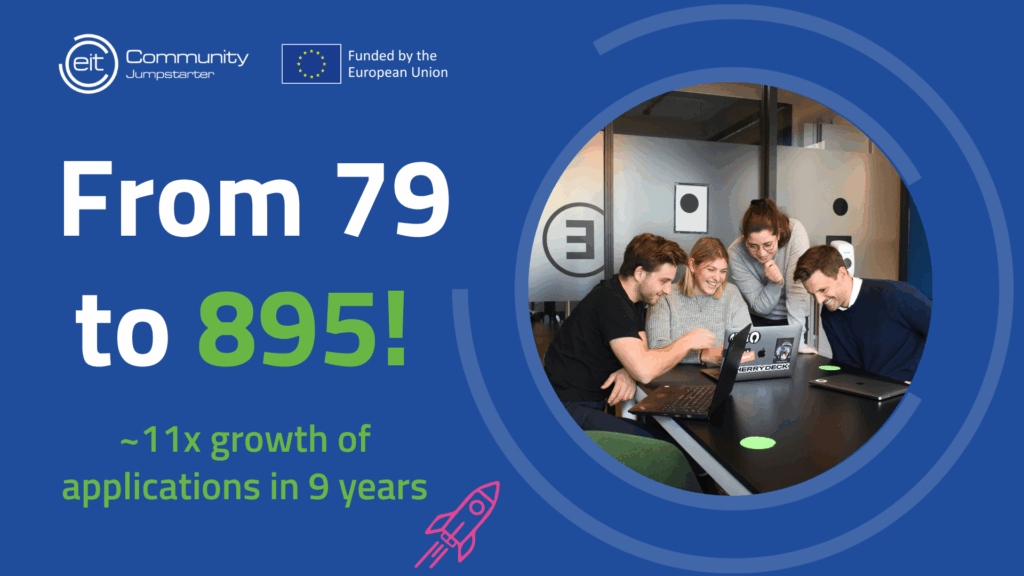
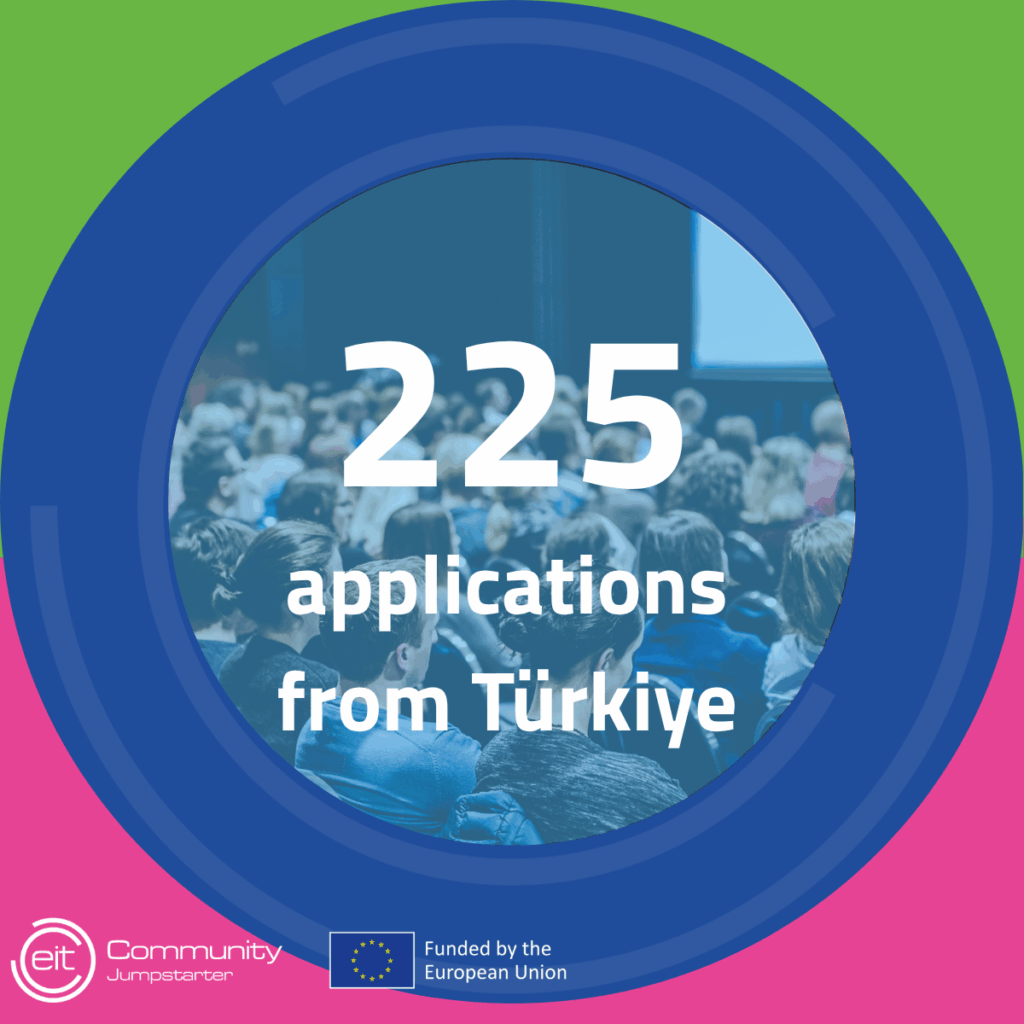
Healthcare drew 288 of this year’s applications, close to a third of the total, with Food & Agritech right behind at 243. Smart Cities and Mobility took 159, Energy and Renewables 71, and Raw Materials 55. The Malta category, open to any sector, had 18 applications competing for 12 spots, a tighter race than any of the five thematic tracks.
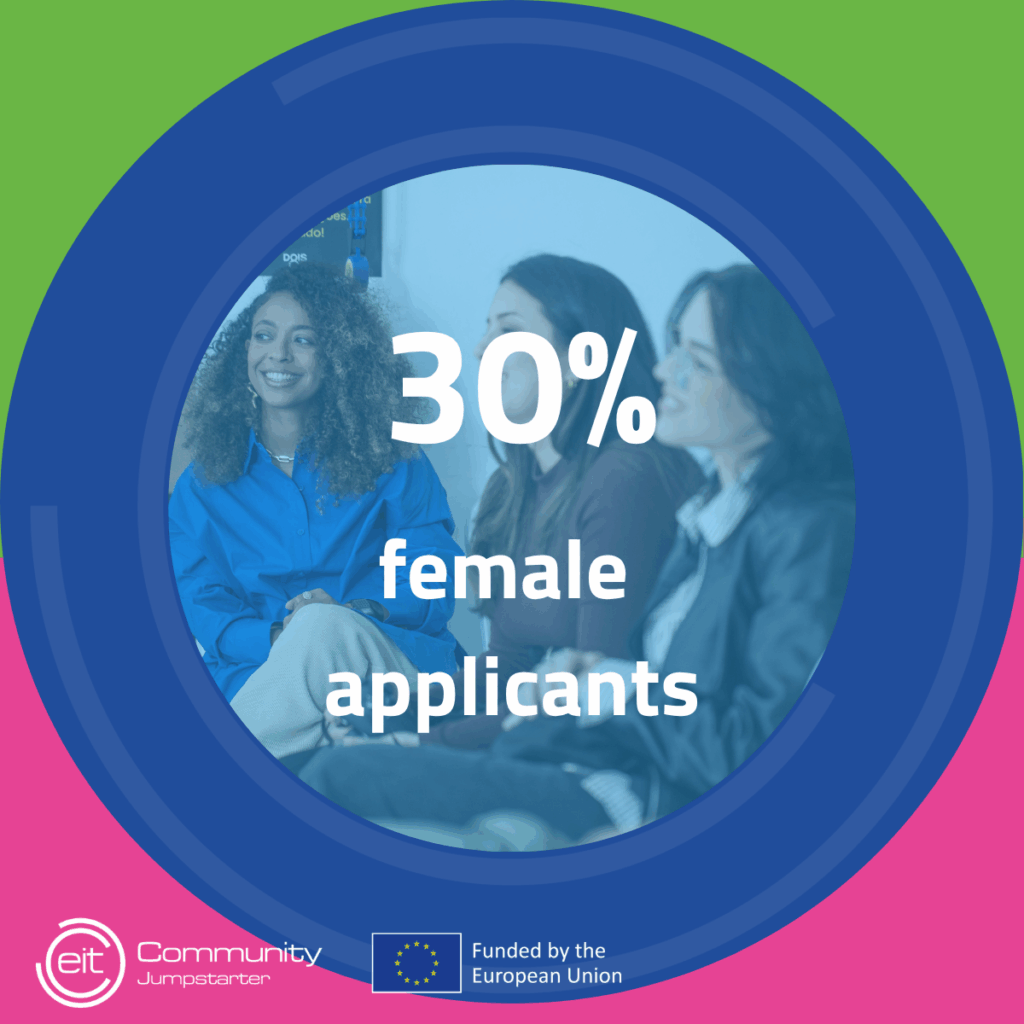
Among applicants who reported founder gender, 30% had a female co-founder, a share that holds steady among eligible applicants too, at 31%. That consistency shows the programme’s outreach is reaching a solid, stable share of female founders right from the start, and that share doesn’t erode simply because a team clears the eligibility bar.
Among the teams selected, the female founder share sits at under 17%. Seeing this gap only becomes possible once the full funnel is laid out stage by stage, rather than looking at the final cohort alone, and that’s exactly the kind of visibility that makes it something the programme can act on. Knowing precisely where the shift happens, at selection rather than earlier, gives next year’s evaluation process a clear, specific place to focus.
Solo founders made up 44% of all applications but only 26.5% of the teams selected. Teams of two or three founders, on the other hand, ended up a bigger share of the cohort than they were of the applicant pool. The takeaway for next year’s applicants is straightforward: if you’re building a solo idea, finding a co-founder before you apply could meaningfully improve your odds.
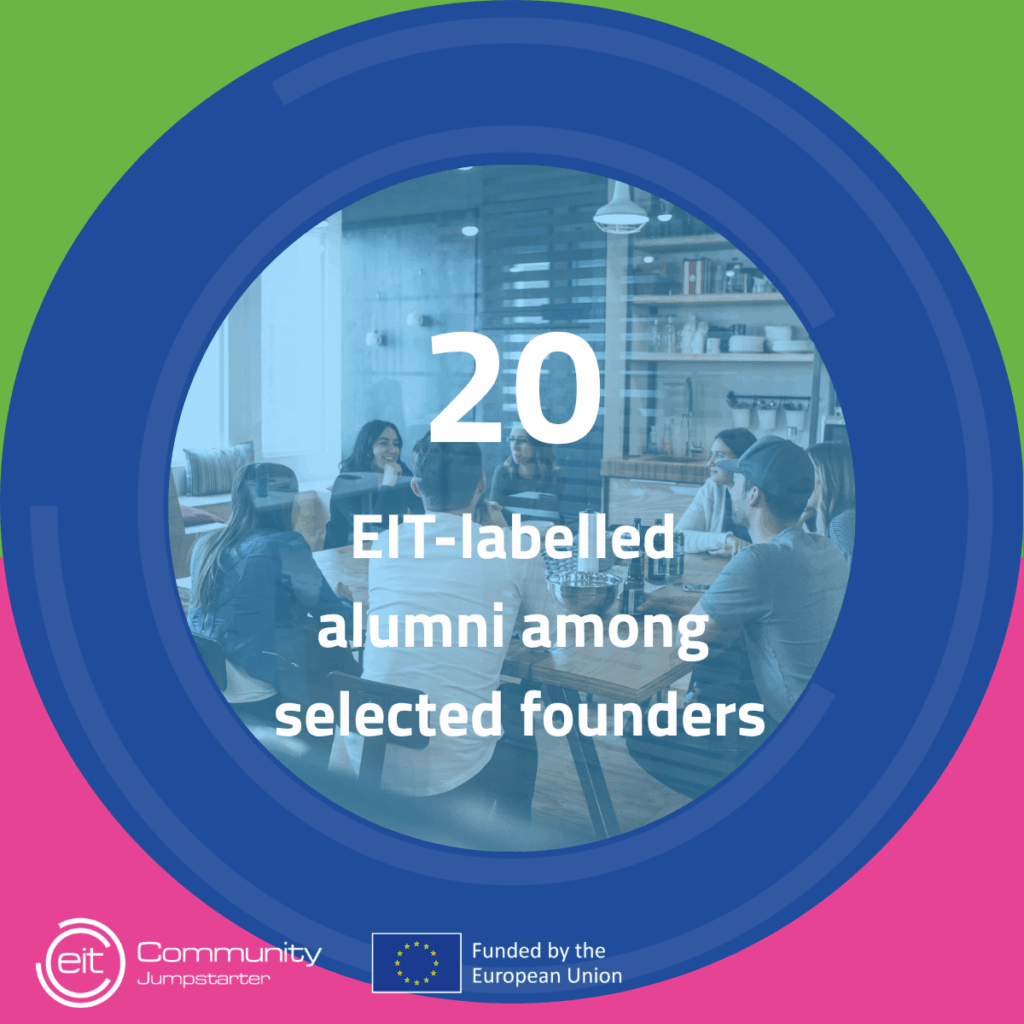
Thirteen selected founders are COST Action graduates, and twenty have already been through some other EIT-labelled programme or HEI initiative. Both figures are smaller than at the application stage, where the same groups numbered 40 and 55. Still, it says something that a meaningful share of this year’s cohort has already touched the EIT ecosystem before, in a master’s programme, a different accelerator, or an earlier cohort altogether.
None of this changes what’s ahead for the 162 teams already in their bootcamps. What comes next is watching how they get on: the ideas they validate, the pivots they make, and the startups that come out the other side. We’ll keep sharing updates on their progress as the cohort moves through the programme, so stay tuned.
Subscribe to Our Newsletter
Copyright EIT Jumpstarter © 2025 All Rights Reserved
| Cookie | Duration | Description |
|---|---|---|
| cookielawinfo-checbox-analytics | 11 months | This cookie is set by GDPR Cookie Consent plugin. The cookie is used to store the user consent for the cookies in the category "Analytics". |
| cookielawinfo-checbox-functional | 11 months | The cookie is set by GDPR cookie consent to record the user consent for the cookies in the category "Functional". |
| cookielawinfo-checbox-others | 11 months | This cookie is set by GDPR Cookie Consent plugin. The cookie is used to store the user consent for the cookies in the category "Other. |
| cookielawinfo-checkbox-necessary | 11 months | This cookie is set by GDPR Cookie Consent plugin. The cookies is used to store the user consent for the cookies in the category "Necessary". |
| cookielawinfo-checkbox-performance | 11 months | This cookie is set by GDPR Cookie Consent plugin. The cookie is used to store the user consent for the cookies in the category "Performance". |
| viewed_cookie_policy | 11 months | The cookie is set by the GDPR Cookie Consent plugin and is used to store whether or not user has consented to the use of cookies. It does not store any personal data. |